+66.(0)2.149 2642 – 3
Hotline

Hotline
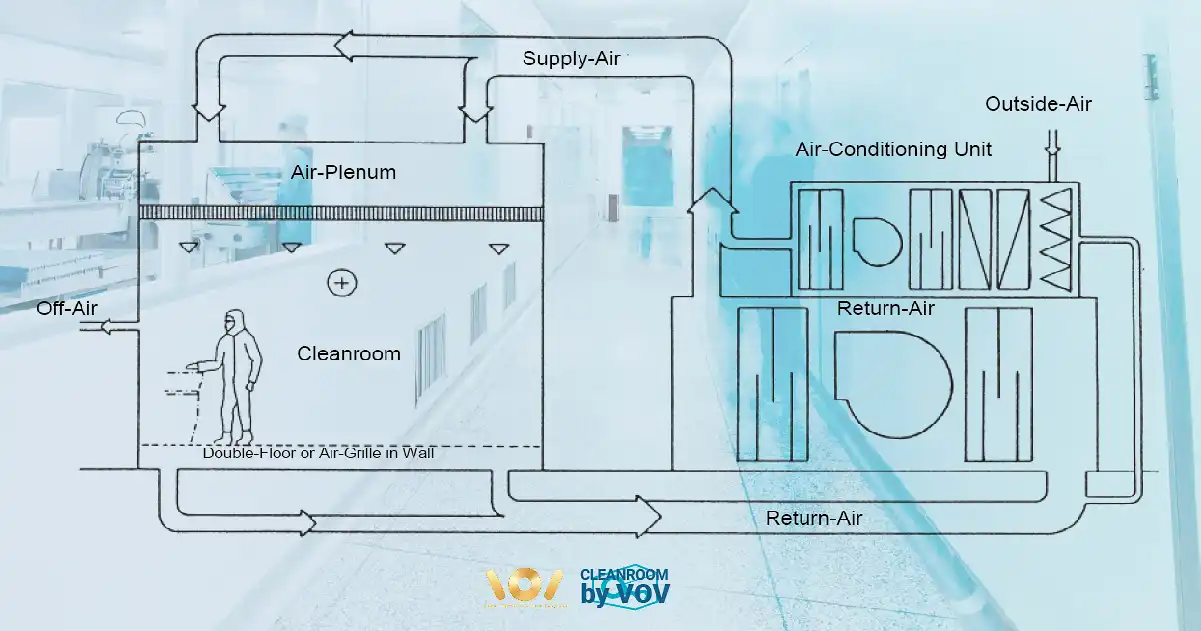
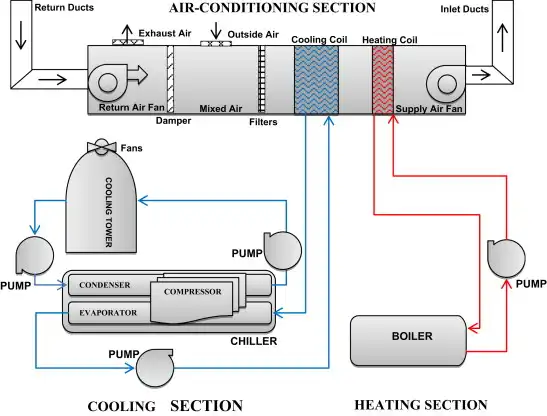
A cleanroom HVAC system is the core heart of controlling air quality and environmental conditions inside a cleanroom, including temperature, humidity, particle concentration, and pressure values. If the HVAC system is not designed correctly according to standards, the cleanroom cannot maintain its ISO Cleanroom Classification , no matter how well the building structure is constructed.
In this article, we will explain what a cleanroom HVAC system is, how it differs from conventional air conditioning systems, what its components are, and what factors must be considered in the design to ensure your cleanroom meets the specified ISO standards.
A cleanroom HVAC system
a special environmental control system designed to regulate temperature, humidity, air cleanliness, and pressure values inside a cleanroom to meet ISO Cleanroom Classification standards, by integrating with HEPA or ULPA filters to trap airborne dust particles before releasing air into the cleanroom.
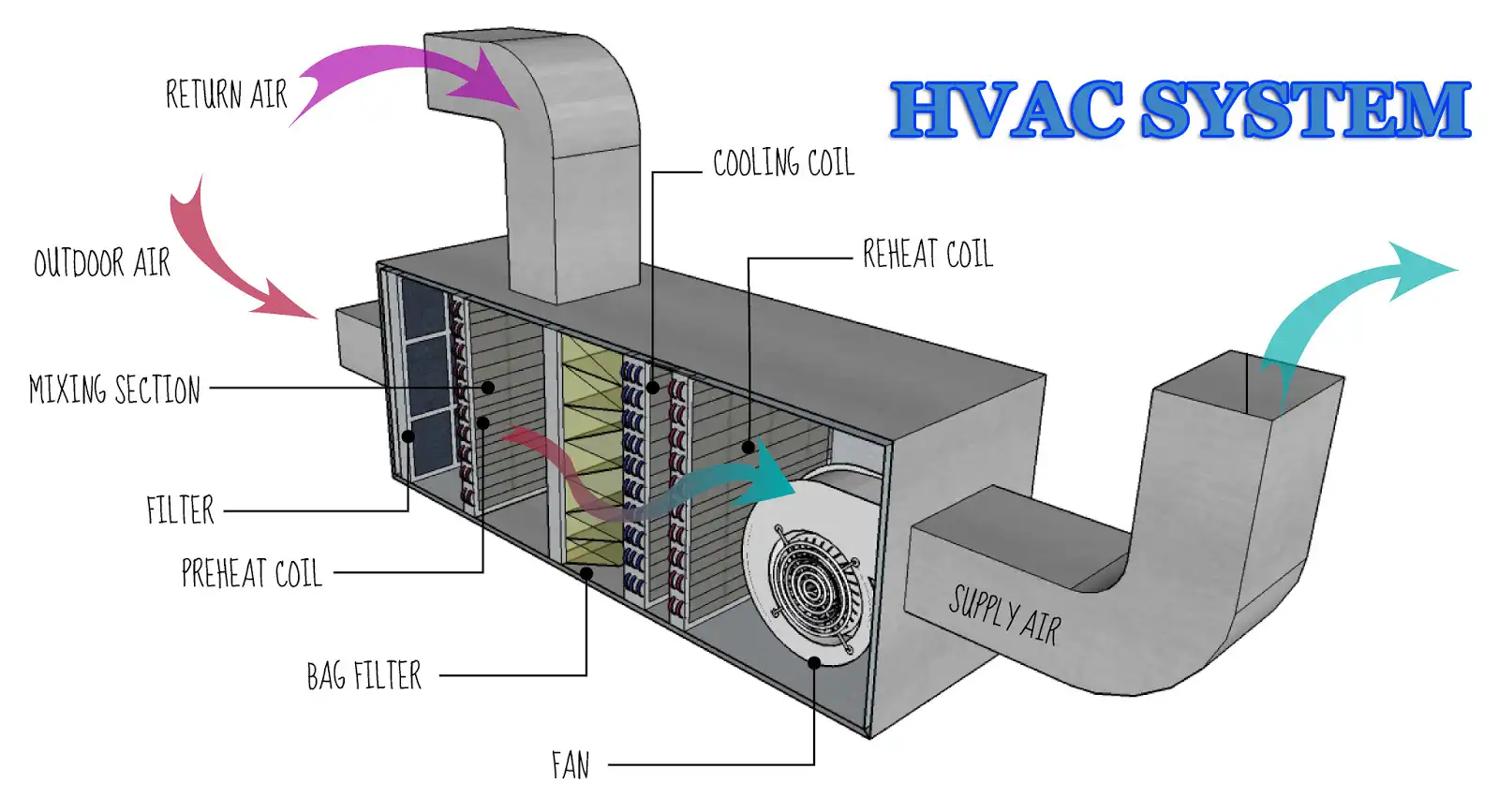
HVAC stands for 3 main parts:
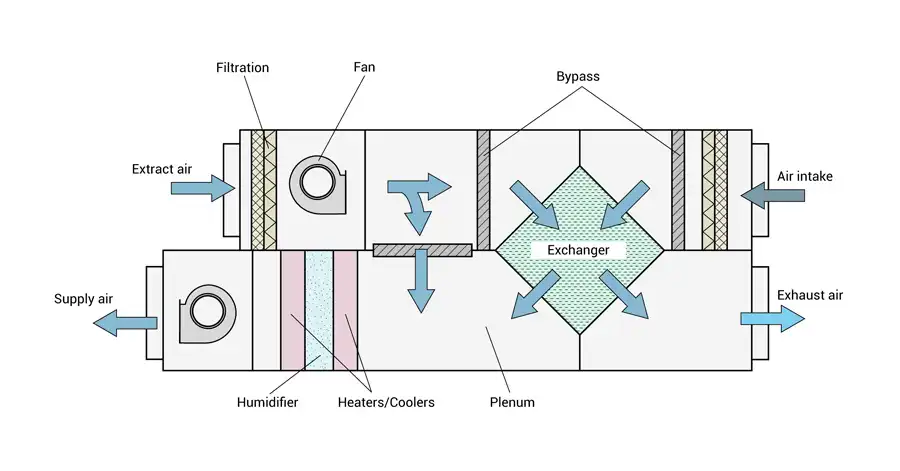
The HVAC system is essential for creating Indoor Air Quality (IAQ) , which covers air exchange, temperature, and humidity control. Generally, HVAC systems are used in schools, commercial buildings, and offices; however, an HVAC system for a cleanroom involves much higher complexity and stricter standards in terms of design, equipment, reliability, and system sizing.
n general buildings, normal air contains about 500,000-1,000,000 particles per cubic foot (particles of size 0.5 microns or larger). Meanwhile, a cleanroom requires a Cleanroom Classification to greatly restrict the amount of dust according to the designated cleanliness level. A cleanroom HVAC system differs from conventional systems in 3 main areas as follows:
General buildings utilize air circulation of only 2-10 times per hour (Air Change Per Hour: ACH), but a cleanroom requires 20-60 ACH and can reach up to 600 ACH for rooms requiring the highest cleanliness. This massive volume of Air Supply plays a vital role in diluting, filtering, and exchanging contaminants inside the cleanroom to maintain the specified standards.
**ACH (Air Change Per Hour) is the number of times the total air volume inside the room is circulated through the air filtration system in 1 hour.* *
Cleanrooms utilize HEPA Filter , which can filter particles as small as 0.3 microns up to 99.97% . The HEPA filter is installed at the room's ceiling at the terminal end of the HVAC system before air enters the cleanroom. The filter values depend primarily on the application and cleanroom specification.
Cleanrooms must maintain internal pressure values that differ from the outside, and values must be measured to prevent pressure changes that might cause dust and contaminants to enter the room or escape outside.
Specifically, a positive pressure Cleanroom must maintain a balance to prevent contaminants and living organisms from entering the room (e.g., chemical solution rooms, electronics cleanrooms), whereas a negative pressure Cleanroom must prevent contaminants from escaping outside (e.g., disease control rooms, COVID-19 outbreak prevention rooms).
| Filter Type | Filtration Efficiency | Suitable ISO CLASS |
|---|---|---|
| HEPA Filter | 99.97% (0.3 microns) | ISO Class 5–8 |
| ULPA Filte | 99.999% (0.3 microns) | ISO Class 1–4 |
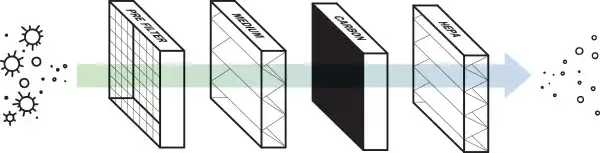
HEPA Filters, or high-efficiency air filters, can trap dust particles as small as 0.3 microns up to 99.97% HEPA filters are available in 6-inch and 12-inch thicknesses and are installed at the final position of the HVAC system before delivering air into the cleanroom. They can be utilized with HEPA Box or FFU (Fan Filter Unit) systems.
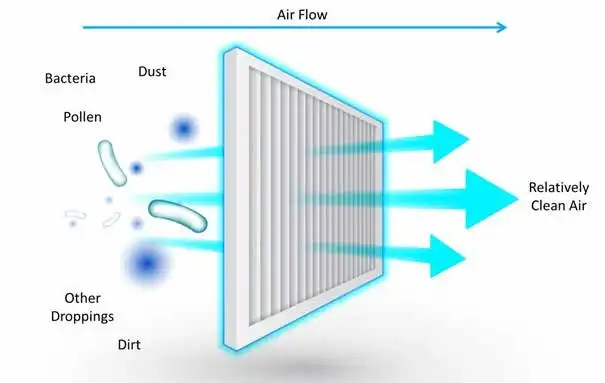
ULPA Filters are higher-quality filters than HEPA, capable of filtering particles down to 0.3 microns up to 99.999% They are suitable for cleanrooms requiring the highest cleanliness, such as ISO Class 1 and Class 2 which are utilized in semiconductor and advanced electronics industries.
Designing an HVAC system for a cleanroom requires considering several factors in combination to ensure the system can effectively maintain ISO standards:
| Factors | Details to Consider |
|---|---|
| 📏 Cleanliness Spec (ISO Classification) | Determines the required ACH and filter efficiency. The lower the Class, the higher the required ACH and the better the filter. |
| 🏗 Cleanroom Layout (Layout) | The size, height, and width of the room directly affect the air supply volume and ductwork design. |
| 👷 Number of Operators in the Room | Humans are the primary source of dust and contamination. Air Supply volume must be calculated to be sufficient for everyone. |
| ⚙️ Tools and Equipment (Heat Gain) | Machines and equipment generate heat, which must be calculated to maintain thermal balance in the room. |
| 💡 Lighting System (Lighting System) | Lighting affects the heat inside the room, which impacts cooling control and the HVAC system load. |
| 🔄 Pressure Values (Pressure Differential) | Positive or negative, depending on the cleanroom type. Must be monitored and maintained stable throughout operation. |
| 🌡️ External Temperature and Humidity | Outside weather directly affects the Cooling/Heating system design, especially in industries requiring 100% clean air. |
Additionally, the HVAC system can be further customized according to requirements, such as a Heating system (for cold climates), a Dust Remover system (for high-dust areas), and a Dehumidifier System (DHS) to enhance humidity reduction, including the use of PIR Wall/PIR Ceiling Panels, , which are efficient in helping to maintain temperature and the structural strength of the cleanroom.
| Comparison Topics | Conventional HVAC (Building/Office) | Cleanroom HVAC |
|---|---|---|
| Air Change Per Hour (ACH) | 2-10 ACH | 20–600 ACH |
| Filter Efficiency | Basic filter (Large dust) | HEPA 99.97% / ULPA 99.999% |
| Pressure Control | Not specifically designated | Must be controlled to a precise ±Pascal |
| Standards to Comply With | ASHRAE Standard | ISO 14644, GMP, IEST |
| Design Complexity | Medium | Very high – Requires multi-factor calculations |
| System Price | Low-Medium | High – Depends on the required ISO Class |
A cleanroom HVAC system requires a much higher Air Change Per Hour (ACH) of 20-600 ACH compared to 2-10 ACH in general buildings. In addition, it utilizes HEPA (99.97%) or ULPA (99.999%) filters to eliminate particles as small as 0.3 microns, and must strictly control pressure, temperature, and humidity values in accordance with ISO Cleanroom Classification standards.
A HEPA Filter removes 99.97% of 0.3-micron particles and is suitable for ISO Class 5-8 cleanrooms. Meanwhile, an ULPA Filter filters up to 99.999% and is suitable for ISO Class 1-4 cleanrooms used in semiconductor and advanced electronics industries that require the highest level of cleanliness.
It depends on the type of application. Cleanrooms in the electronics, semiconductor, and general pharmaceutical industries usually utilize positive pressure (Positive Pressure) to prevent outside air and contamination from flowing in. On the other hand, rooms working with hazardous substances (Hazard Products) will utilize negative pressure (Negative Pressure) to contain contamination inside and prevent it from spreading outside.
The main factors to consider include the room's cleanliness level (ISO Class), room layout and area size, number of personnel in the room, heat-generating equipment (Heat Gain), lighting system, required pressure value (positive or negative), and external temperature-humidity conditions. All of these directly affect the sizing and specs of the HVAC system.
The HVAC system is crucial to a cleanroom as an environmental control system relating to dust particles, temperature, humidity, and pressure values. It is a vital part of defining cleanroom criteria in accordance with the specified ISO 14644 standards , requiring detailed and precise design, as well as quality testing from the construction stage, to ensure the air circulation system (Air Flow) operates efficiently throughout its lifespan.
Read more about Cleanroom Testing and cleanroom quality inspection in our other articles.
🏭 Need to build a cleanroom or design an HVAC system?
VOV's expert team is ready to provide consultation from HVAC system design to comprehensive, full-service Cleanroom Turnkey construction.
Please fill out the form below completely