+66.(0)2.149 2642 – 3
Hotline

Hotline
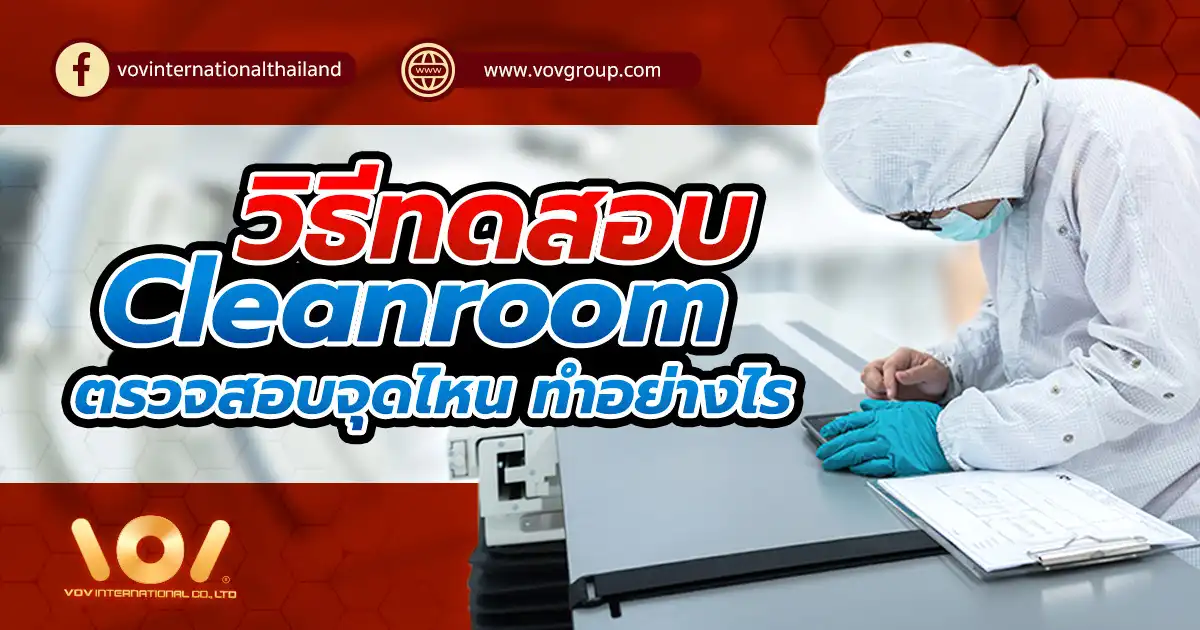
A proper Cleanroom testing method must cover 7 key points, from pre-commissioning to routine post-operation cycles, to confirm that the cleanroom functions fully in accordance with NEBB standards. Testing that is incomplete or does not cover all points may lead to deviations or results that do not reflect reality. This article summarizes "Cleanroom Testing Methods" across 7 points, prepared by the VOV team as a guideline for businesses at all levels.
Cleanroom Performance Testing (CPT) is the process of verifying cleanroom operational efficiency to confirm that various values, including air cleanliness level, pressure, airflow velocity, lighting, and noise, comply with specified standards according to ISO 14644-1 and NEBB , both prior to utilization and throughout the room's lifespan.
CPT is divided into 2 main types: Industrial Cleanrooms (ICR) and Biological Cleanrooms (BCR) , which have different testing criteria according to international standards.
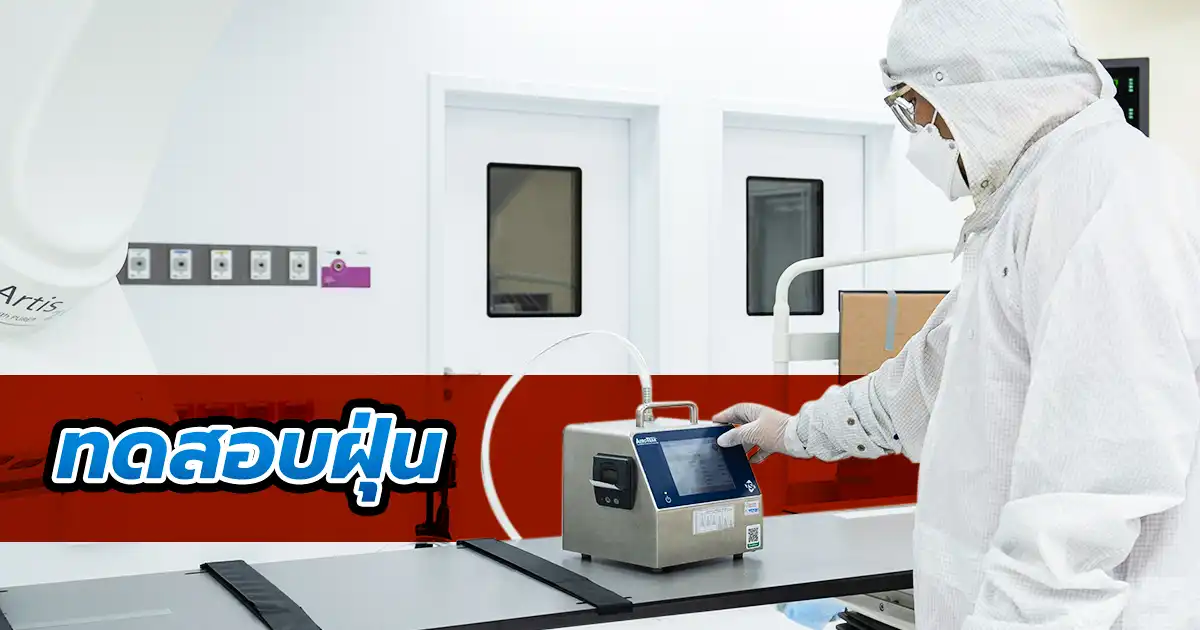
Measuring dust particles is the most crucial step in Cleanroom testing, as it determines whether the room passes classification according to ISO 14644-1. The primary equipment used is a Particle Counter , available in medium sizes (as shown in the image) and smaller sizes.
The dust measurement process starts by drawing air into the Particle Counter machine, which then measures the dust level to compare with the cleanroom specification (class). The dust value per 1 cubic foot of air volume is evaluated and recorded as the test result. During testing, technicians must minimize body movement to prevent generating additional dust.
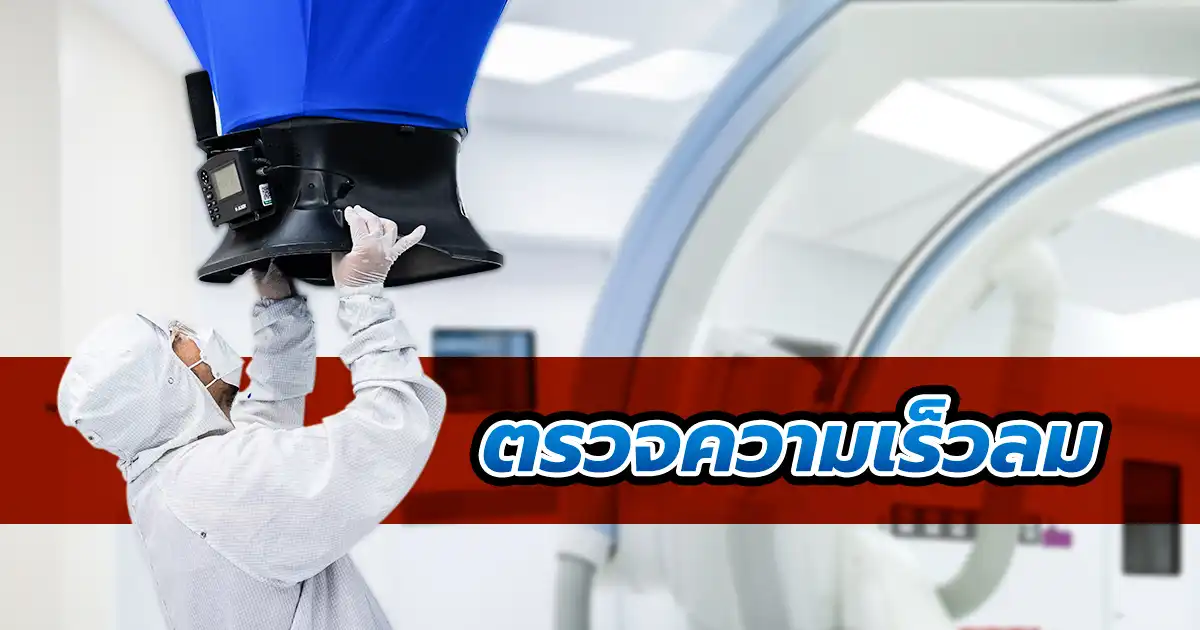
"Airflow Velocity Measurement" involves the air passage flow inside the room, which must correspond with the specifications of both room types: positive pressure rooms and negative pressure rooms.
Airflow velocity testing measures the efficiency of the HVAC system, which functions to regulate temperature and air pressure inside the room. If the airflow velocity does not match specifications, the HVAC system must be corrected first. The equipment used is a Direct Reading Hood , which resembles an asymmetrical rectangular-cylindrical box that covers over the ceiling air vents, subsequently taking measurements and displaying results on a monitor screen.
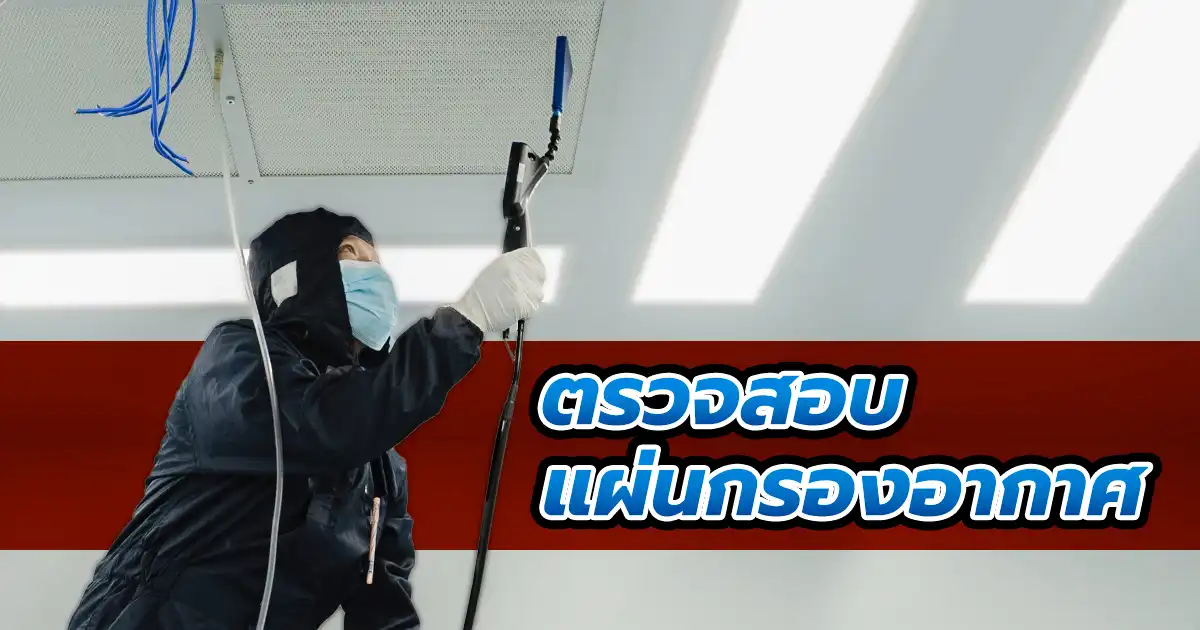
The vital heart of the Cleanroom testing method is the inspection of HEPA Filterair filters to check for leaks in every nook, every slot, and every corner.
The testing process begins by introducing PAO (Polyalphaolefin) substance into the system via an Aerosol Generator to create a special smoke that flows into the HVAC ventilation system. Following that, Scanning Probes are utilized to inspect the circulation and leak locations of the HEPA Filter air filter once more to confirm there are absolutely no leak points.
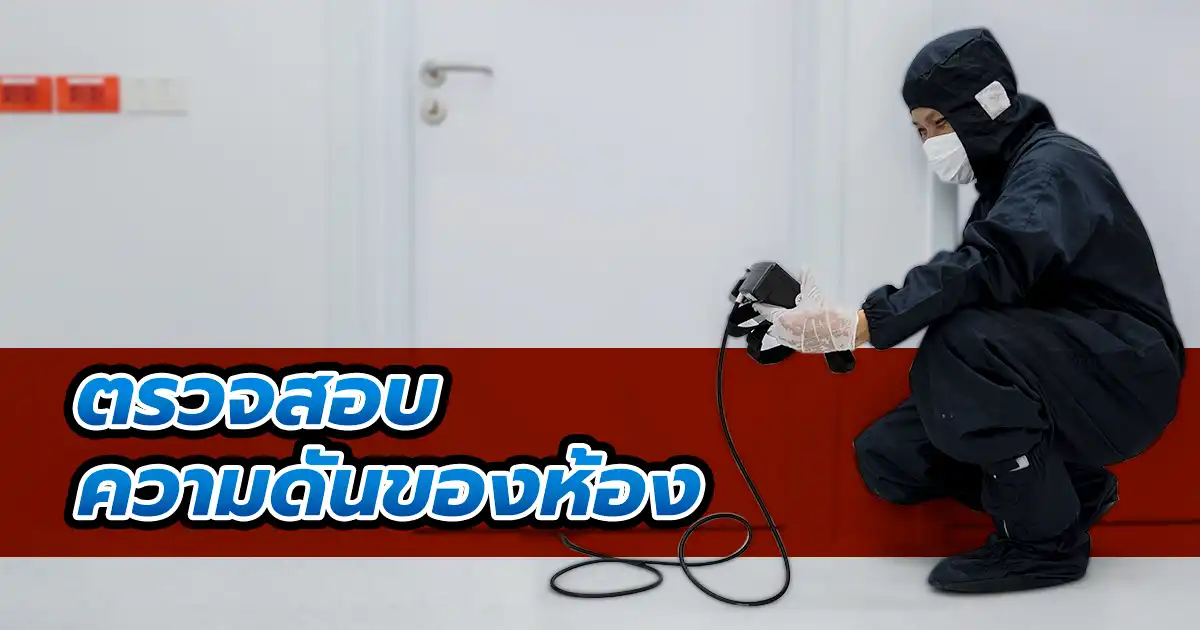
The Cleanroom testing method by measuring air pressure inside the room must always align with the "cleanroom type", which consists of 2 types: positive pressure rooms and negative pressure rooms.
Measuring room pressure is a highly important testing method. The team uses an instrument called a Manometer to measure internal room pressure to match the specifications, type, and requirements of the industry using the cleanroom. The obtained values will indicate whether the room can control airflow in the correct direction.
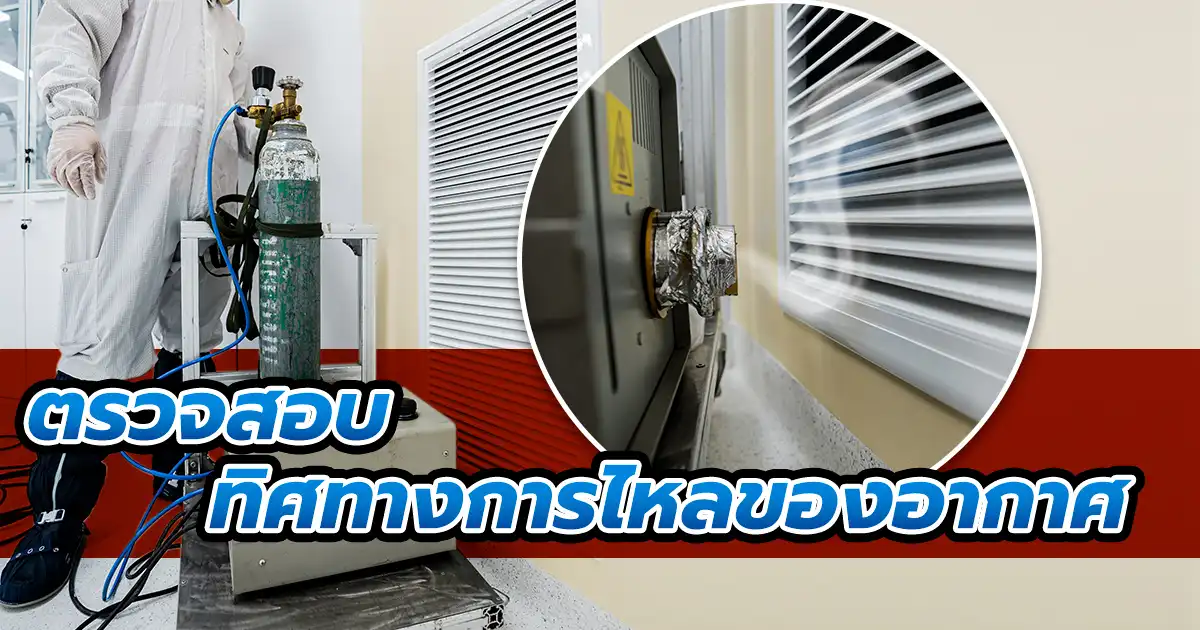
According to design principles, a Cleanroom is designed as a closed system to strictly control the entry and exit of all types of particles. However, in practice, operators working inside the cleanroom need oxygen to breathe, necessitating a balanced internal air circulation system.
The Airflow Parallelism Test is a test of the air circulation rate, or Airflow Parallelism Test, which is a very important test for high-efficiency Cleanrooms. It requires perfect air circulation at every step, with clear air inlets and outlets, smooth air circulation, and no odor accumulation. The system can monitor the Airflow Parallelism Test using the same testing method as the HVAC air conditioning system and HEPA Filter air filters.
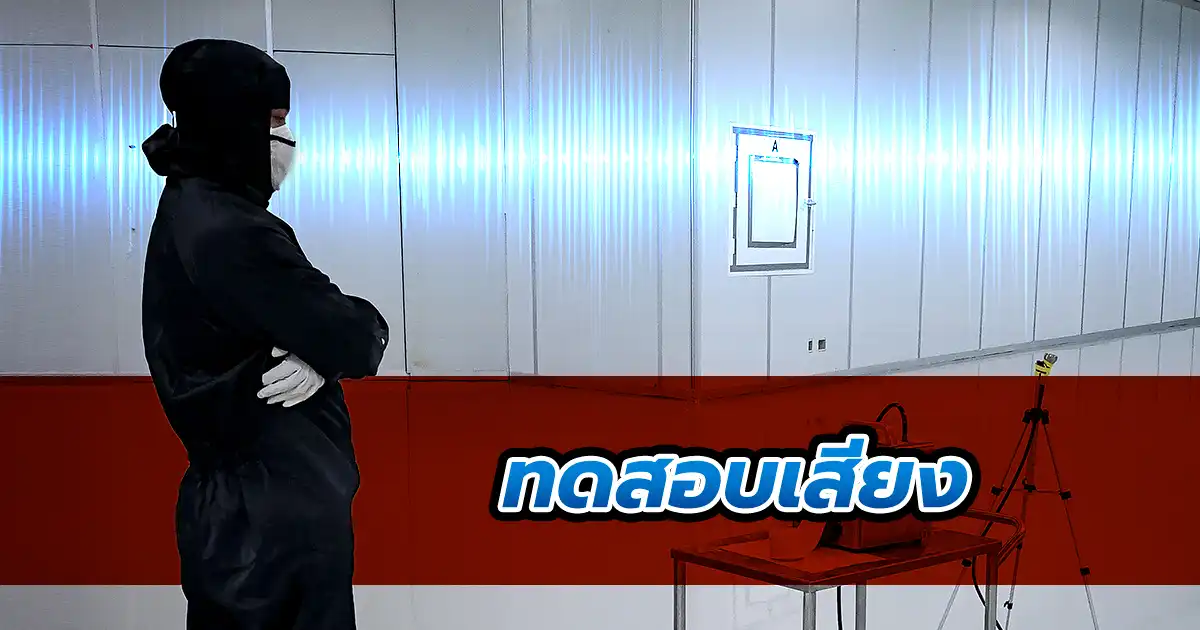
Do not think noise is unimportant! Because good communication is the heart of work efficiency, helping to reduce errors and accidents at work. The team can test the sound level in the Cleanroom with a set of equipment including:
If the Cleanroom has a noise level louder than the specified limit, whether originating from inside the room, such as machinery operation noise, or external noise disturbances, the responsible person must notify the Cleanroom testing service provider to achieve an acceptable standard.
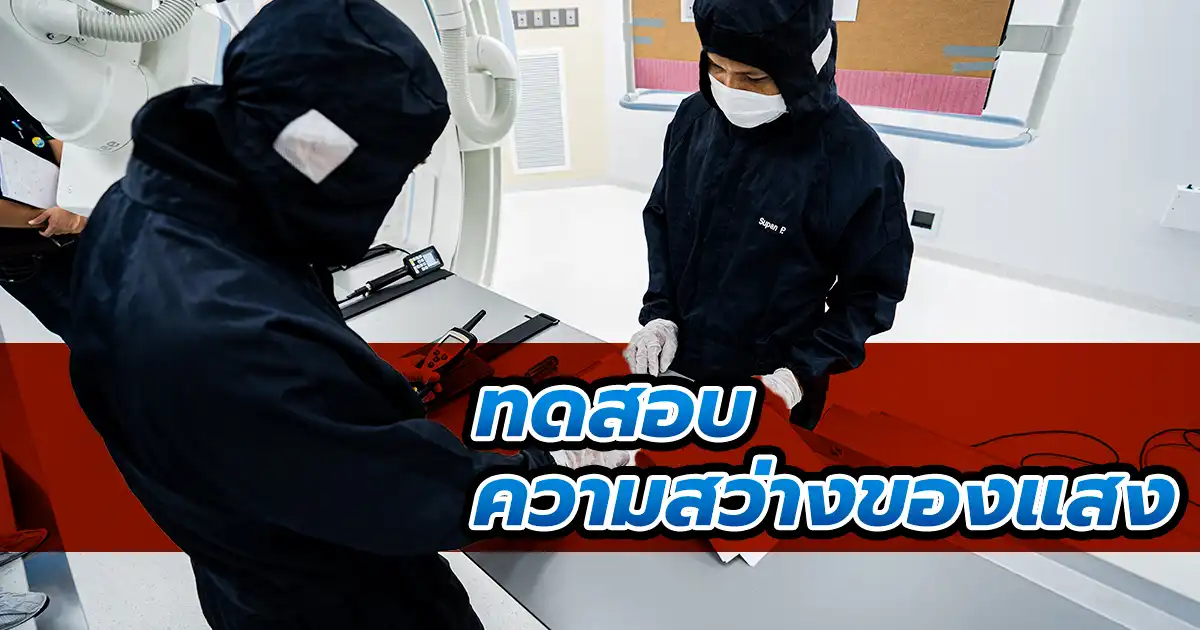
The final Cleanroom testing method involves measuring the light and brightness inside the room, which can be measured using a Light Meter to check the lighting level and light intensity within the room. If the room has too little light, it will affect work accuracy as well as the eye health of the employees.
Testing the brightness in a Cleanroom should aim for the maximum brightness appropriate for the utilizing industry and should be conducted regularly to ensure the lights function normally at all times.
| Testing Point | Equipment | What is Inspected |
|---|---|---|
| 1. Dust/Bacteria Level | Particle Counter | Number of particles per cubic foot compared to ISO Class |
| 2. Airflow Velocity | Direct Reading Hood | Airflow rate corresponding to the HVAC system |
| 3. HEPA Filter | Aerosol Generator + Scanning Probes | Leakage of the air filter |
| 4. Room Pressure | Manometer | Positive/negative pressure values matching the room type |
| 5. Air Circulation | The Airflow Parallelism Test | Direction and balance of internal air |
| 6. Sound Level | SLM + Acoustic Calibrators | Room noise level does not exceed standards |
| 7. Lighting | Light Meter | Light intensity in the working area |
In addition to this, there is additional cleanroom testing for specific points. This is an agreement made jointly between the "business owner" and the "Cleanroom testing service provider." It is considered an advanced level and contains details that are quite more complex than usual.
In the event the cleanroom passes testing, the staff must submit data, reasons, and details of areas that had problems or did not meet standards, so the business owner can submit correction values for a secondary improvement and reinforcement. The 2nd Cleanroom testing is based on the customer's needs and selecting the best possible options for the new setup.
For more information regarding testing cycles, you can read the article: When and How Should a Cleanroom be Tested.
VOV International provides comprehensive Cleanroom testing across all 7 points by a team of experts certified by NEBB , which is a world-class organization with the highest credibility in the Cleanroom industry. Testing can be conducted both upon handover and post-operation according to specified cycles.
VOV International offers comprehensive Cleanroom Turnkey construction services, from design, construction, and system installation, to testing by a Third Party. Upon passing the test, Certification will be received immediately.
👉 Contact the VOV team for consultation regarding Cleanroom testing
การทดสอบ Cleanroom มาตรฐานครอบคลุม 7 จุดสำคัญ ได้แก่ (1) วัดค่าฝุ่นและแบคทีเรียด้วย Particle Counter (2) วัดความเร็วลมด้วย Direct Reading Hood (3) ตรวจสอบ HEPA Filter ด้วย PAO + Scanning Probes (4) วัดความดันห้องด้วย Manometer (5) ทดสอบการไหลเวียนอากาศ (Airflow Parallelism) (6) วัดความดังเสียงด้วย Sound Level Meter และ (7) วัดความสว่างด้วย Light Meter
CPT คือกระบวนการทดสอบประสิทธิภาพของห้องคลีนรูมอย่างครอบคลุม เพื่อยืนยันว่าระดับความสะอาดของอากาศ ความดัน ความเร็วลม แสงสว่าง และเสียง อยู่ในมาตรฐานที่กำหนดตาม ISO 14644-1 และ NEBB ดำเนินการโดยผู้เชี่ยวชาญและใช้อุปกรณ์เฉพาะทาง
PAO (Polyalphaolefin) เป็นสารที่ใช้สร้างอนุภาคจำลองเพื่อทดสอบการรั่วไหลของแผ่นกรอง HEPA Filter ในทุกตำแหน่ง เนื่องจาก HEPA Filter ที่รั่วจะทำให้ฝุ่นและสิ่งปนเปื้อนผ่านเข้ามาในห้องได้ ส่งผลให้คลาสของห้องไม่เป็นไปตามมาตรฐาน ISO ที่กำหนดไว้
การทดสอบ Cleanroom ที่มีคุณภาพต้องดำเนินการโดยผู้เชี่ยวชาญที่ผ่านการรับรองจาก NEBB (National Environmental Balancing Bureau), ซึ่งเป็นองค์กรระดับนานาชาติ โดย VOV International เป็นหนึ่งในผู้ให้บริการทดสอบ Cleanroom ที่ได้รับการรับรองจาก NEBB ในประเทศไทย
หากห้องคลีนรูมทดสอบไม่ผ่าน ทีมงานผู้เชี่ยวชาญจะรวบรวมข้อมูล เหตุผล และรายละเอียดส่วนที่เกิดปัญหาส่งให้เจ้าของโครงการ เพื่อดำเนินการแก้ไขปรับปรุงระบบ แล้วจึงทำการทดสอบซ้ำอีกครั้ง โดย VOV พร้อมให้คำปรึกษาและแก้ไขจนได้มาตรฐาน
Please fill out the form below completely